
Breaking the Habit of Easy Answers: Cultivating Curiosity in a Busy World
The Emberhart Weekly

We all like to think we are good at making sense of the world. But without even noticing, we trip into mental potholes—assuming, guessing, repeating what “sounds right.” It is not that we are careless; our brains are wired to save energy, and shortcuts feel comfortable. The trouble is, comfort is not the same as clarity, and those small lapses in thinking can quietly snowball into big mistakes.
After the long, unstructured days of summer, there is something grounding about the first cool mornings of autumn. The air carries a quiet invitation to slow down, to trade sand between our toes for the steady rhythm of daily life. Calendars begin to fill, familiar routines return, and our minds shift from vacation ease to a more focused pace. It is a season of gentle reset—a chance to bring fresh attention to the way we think, decide, and move forward.
Rethinking How We Think: The Power of Critical Thinking
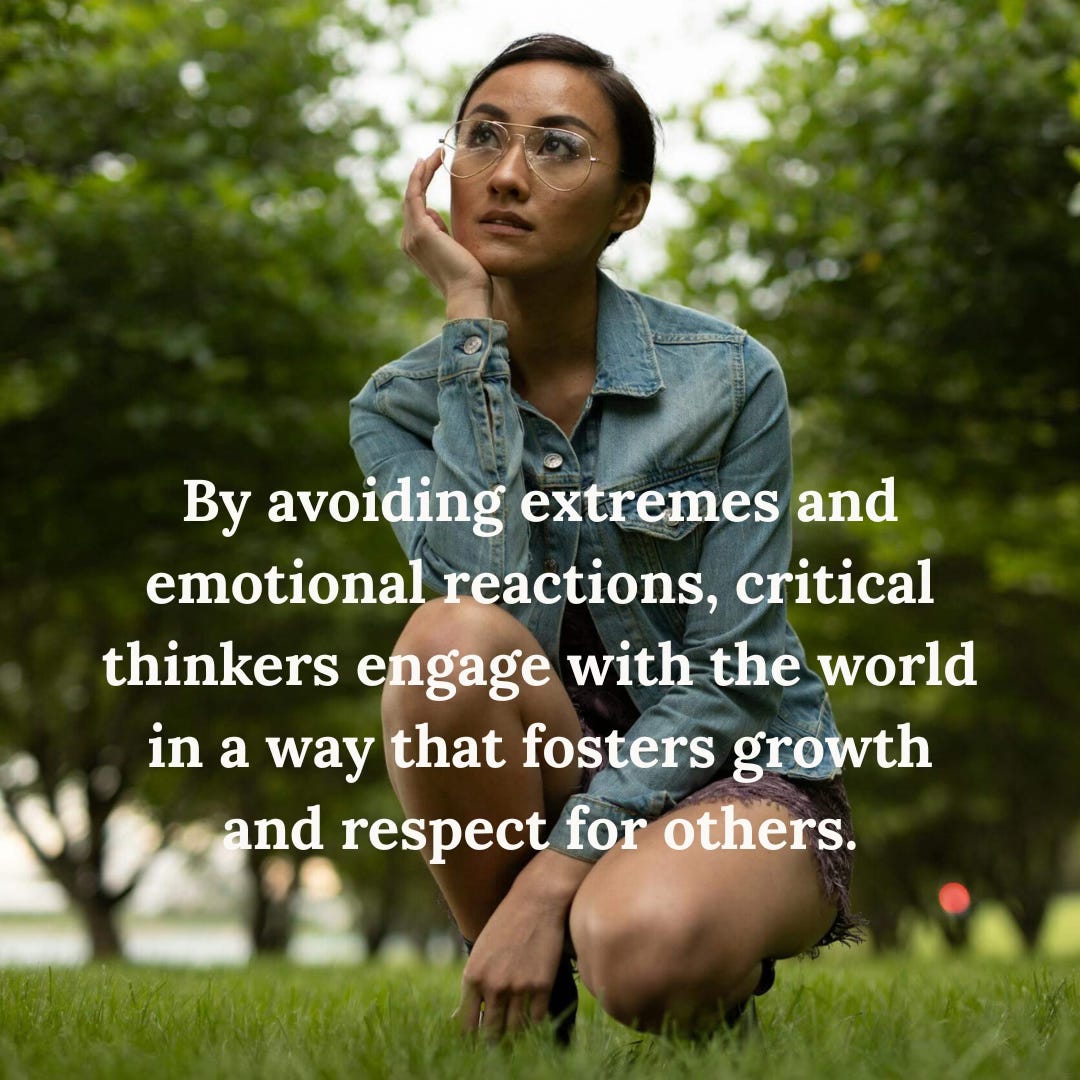
Critical thinking is more than a buzzword—it’s a transformative skill that elevates how we learn, make decisions, and engage with the world. At its core, it’s “the art of thinking about thinking,” a conscious effort to evaluate our thought processes, challenge assumptions, and refine our judgments.
Drawing insights from Linda M. Murawski’s article Critical Thinking in the Classroom…and Beyond (2002), we’re reminded that critical thinking is not an innate talent—it’s a habit we can cultivate through reflection, practice, and openness.
A true critical thinker is inquisitive and grounded. They acknowledge their limitations, seek diverse perspectives, and welcome intellectual risk. They don’t just settle for the first solution—they pause, explore, test, and iterate. Above all, they listen—not just to respond, but to understand.
In contrast, non-critical thinking can quietly take root:
• Seeing only your own viewpoint
• Rushing to conclusions
• Making surface-level judgments
• Ignoring evidence
• Resisting feedback or change
These pitfalls may feel comfortable, but they often limit growth and cloud judgment. The good news? Recognizing these patterns is the first step to shifting away from them.
🌿 https://www.emberhart.com/an-introduction-to-critical-thinking-avoiding-non-critical-pitfalls/
To develop critical thinking, start small: question assumptions, slow down your decision-making, and consider perspectives beyond your own. The more you engage with this process, the more instinctive it becomes.
In an increasingly complex world, critical thinking isn’t optional—it’s essential.
#CriticalThinking #DecisionMaking #LeadershipDevelopment #GrowthMindset #LifelongLearning #Deception #Emberhart #Perspective